Commercial Concrete Floors
Power-troweled slabs for warehouses, shops, and retail: flat, correctly jointed, and poured on a schedule that keeps you operating.
40+
years in business
- Licensed & insured
- In business since 1985
- Free on-site estimates
- Village permits handled
A commercial floor is judged on three things: flatness, joint performance, and how fast it can go back into service.
Flatness comes from placement method and finishing discipline, so on large open pours we use a laser screed, then power float and trowel to burnish a dense wearing surface. Joints are where warehouse floors actually fail: concrete shrinks, and the only question is whether that shrinkage happens in a saw cut or in a random crack across an aisle. We plan the joint grid to the column layout before the pour and cut early, within six to twelve hours, using an early-entry saw.
What's included
- Subgrade proof-roll and compacted stone base
- Vapor barrier under conditioned space
- Rebar, mesh or macro-synthetic fiber reinforcement
- Laser screed or wet screed placement
- Power float and power trowel finishing
- Early-entry saw cuts on a planned grid
How the job goes
- Review drawings, set joint and pour layout
- Permit, subgrade prep, base compaction
- Vapor barrier, reinforcement, screed rails
- Pour, trowel, saw cut, cure
Commercial Floors jobs (6)
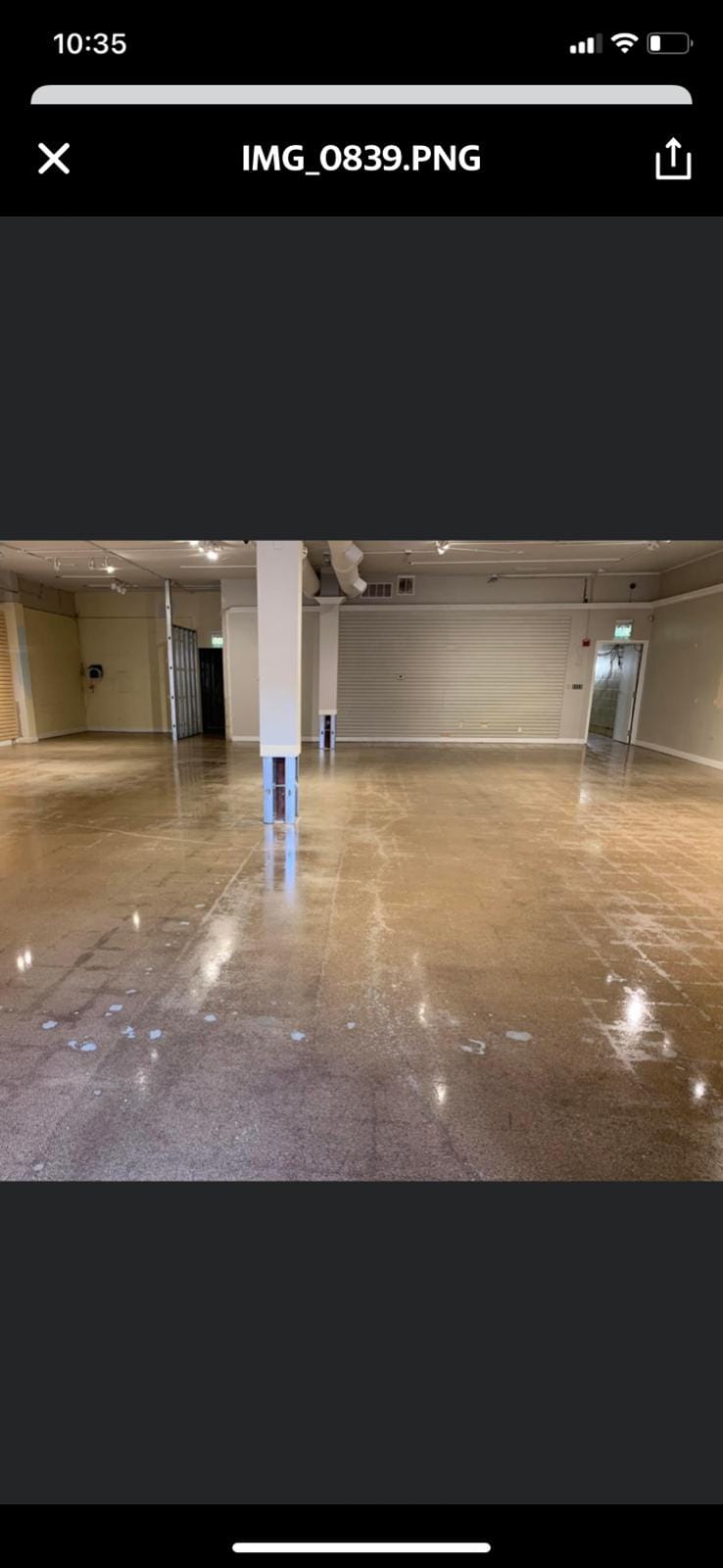
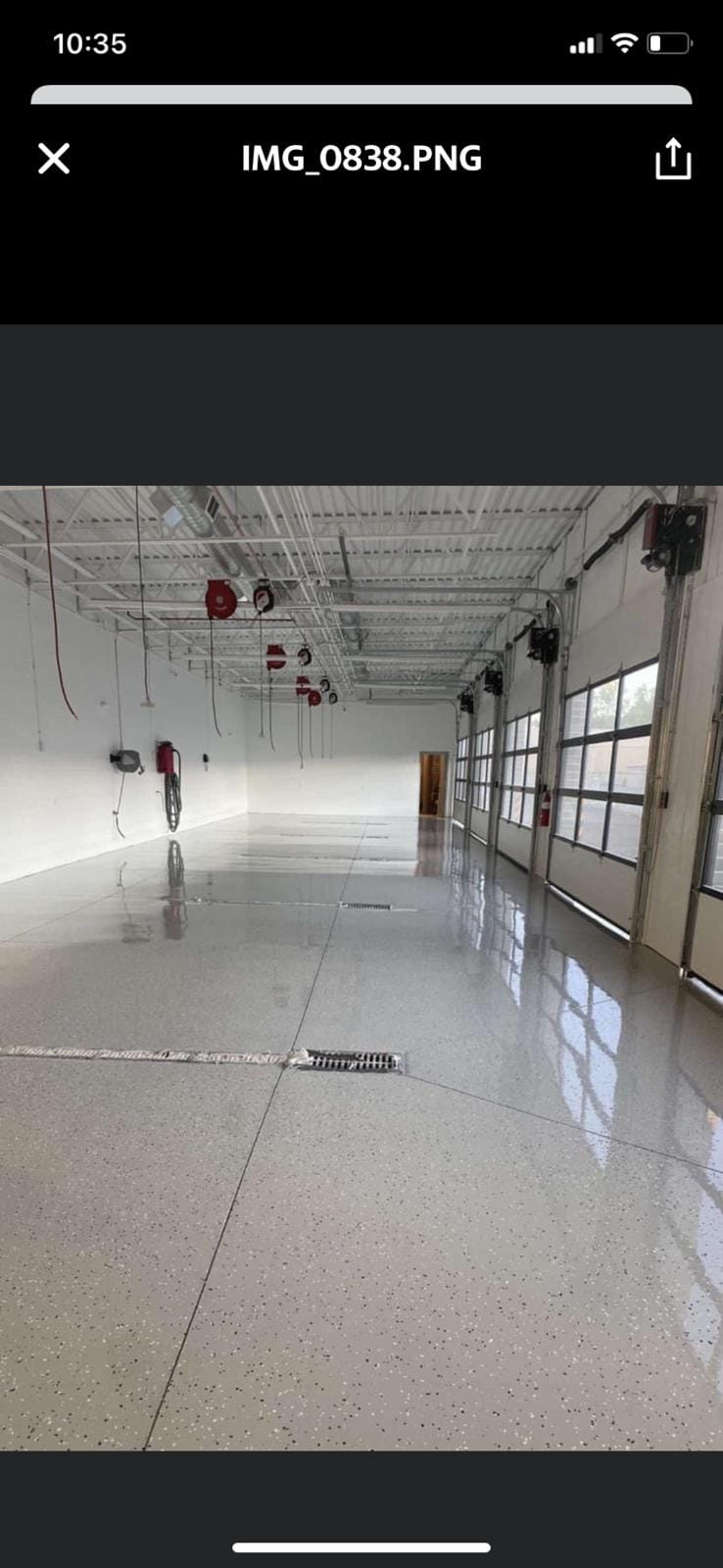
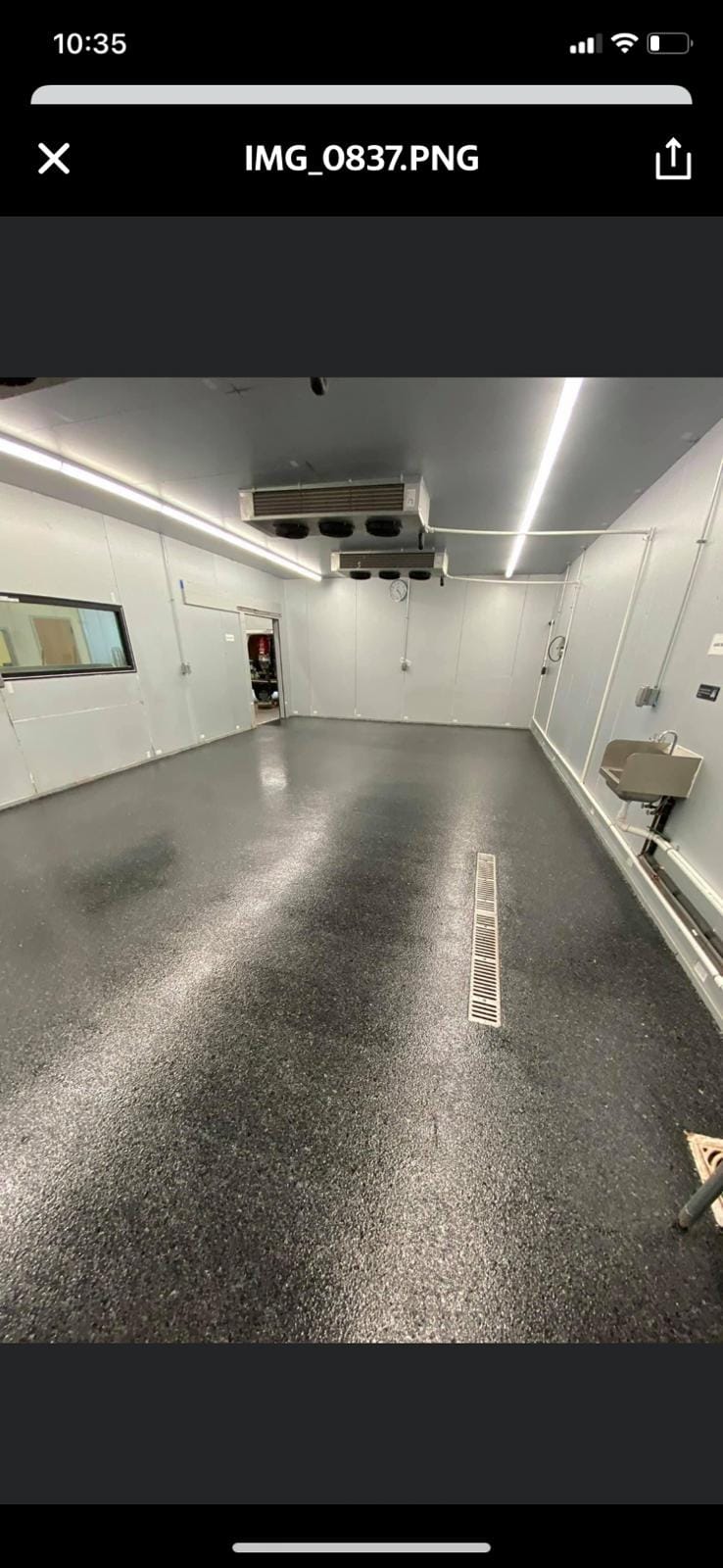
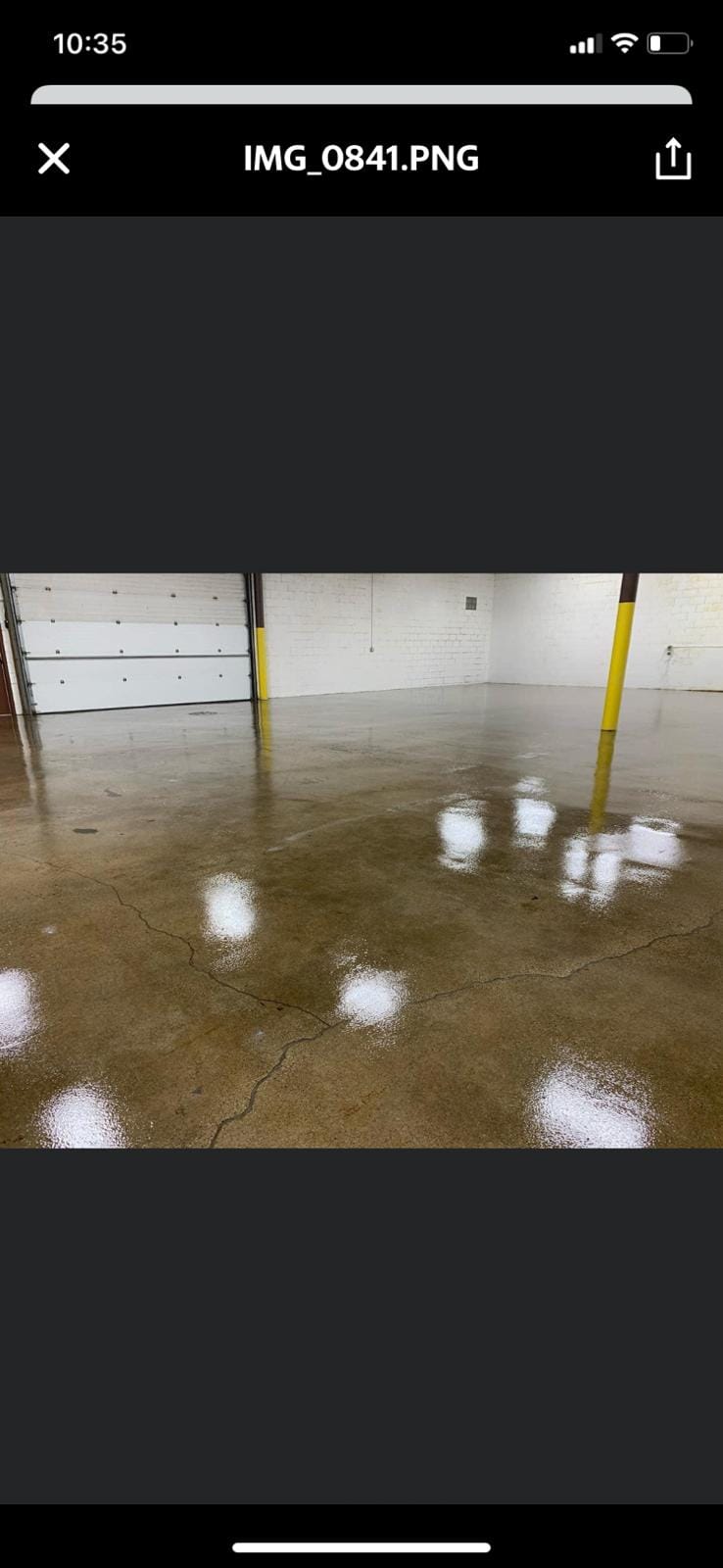
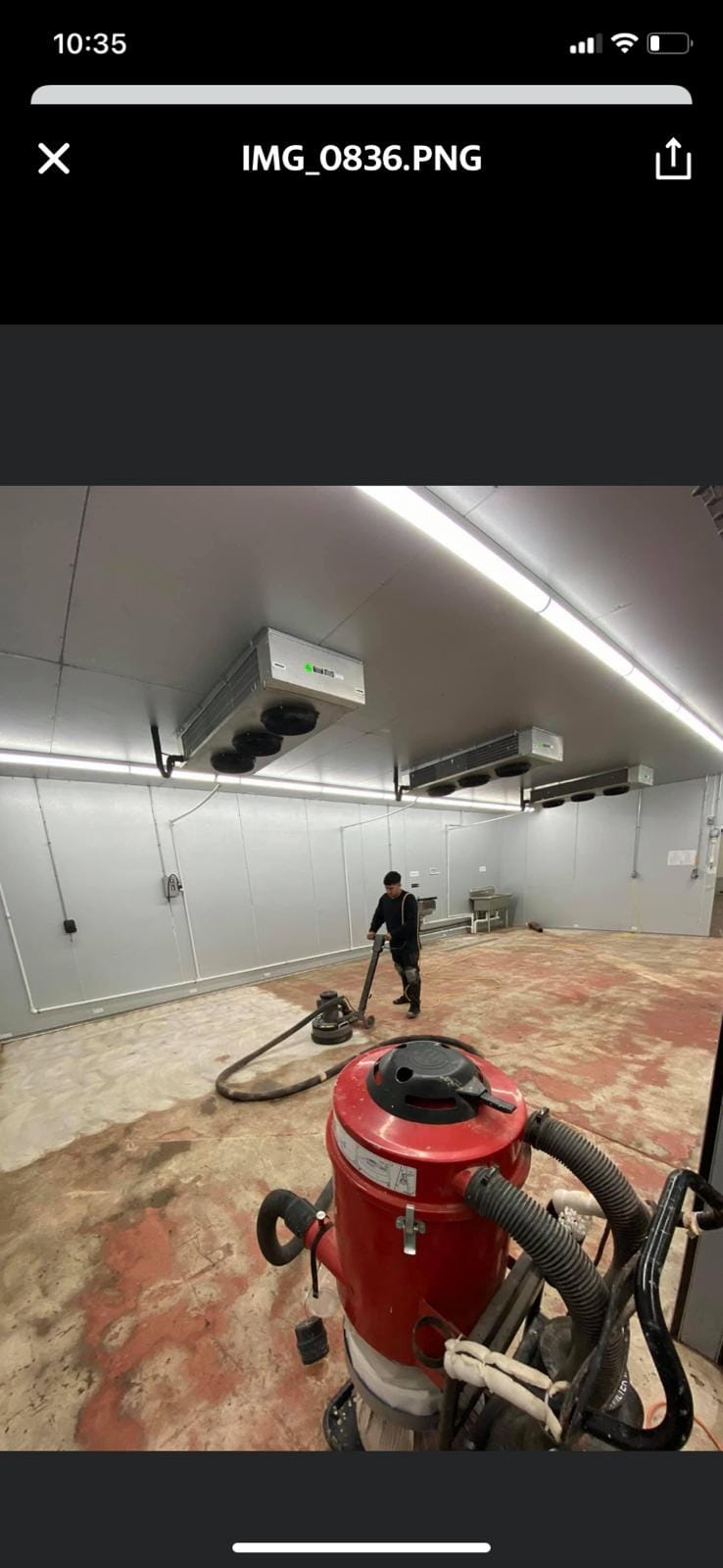
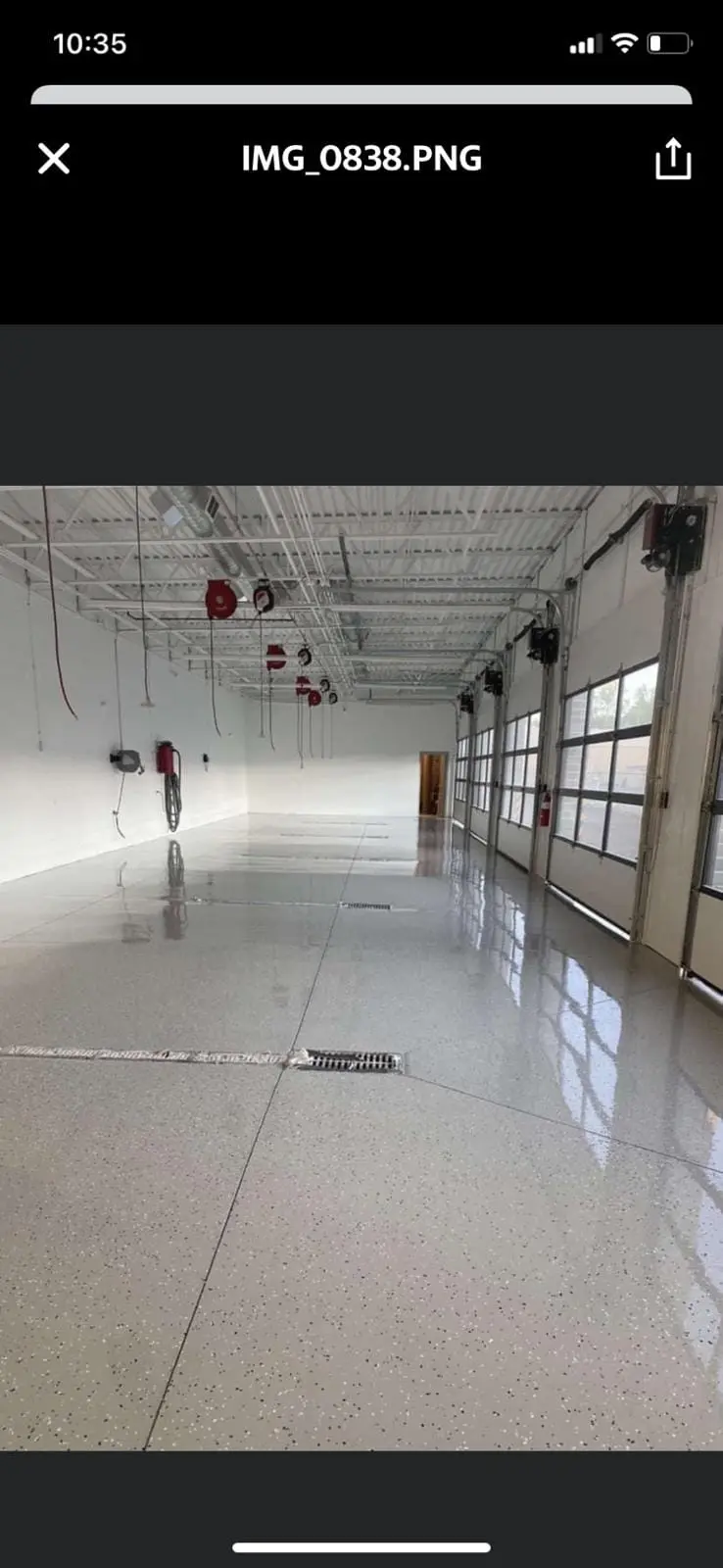
Drag the handle
Commercial Floors: prep to finish
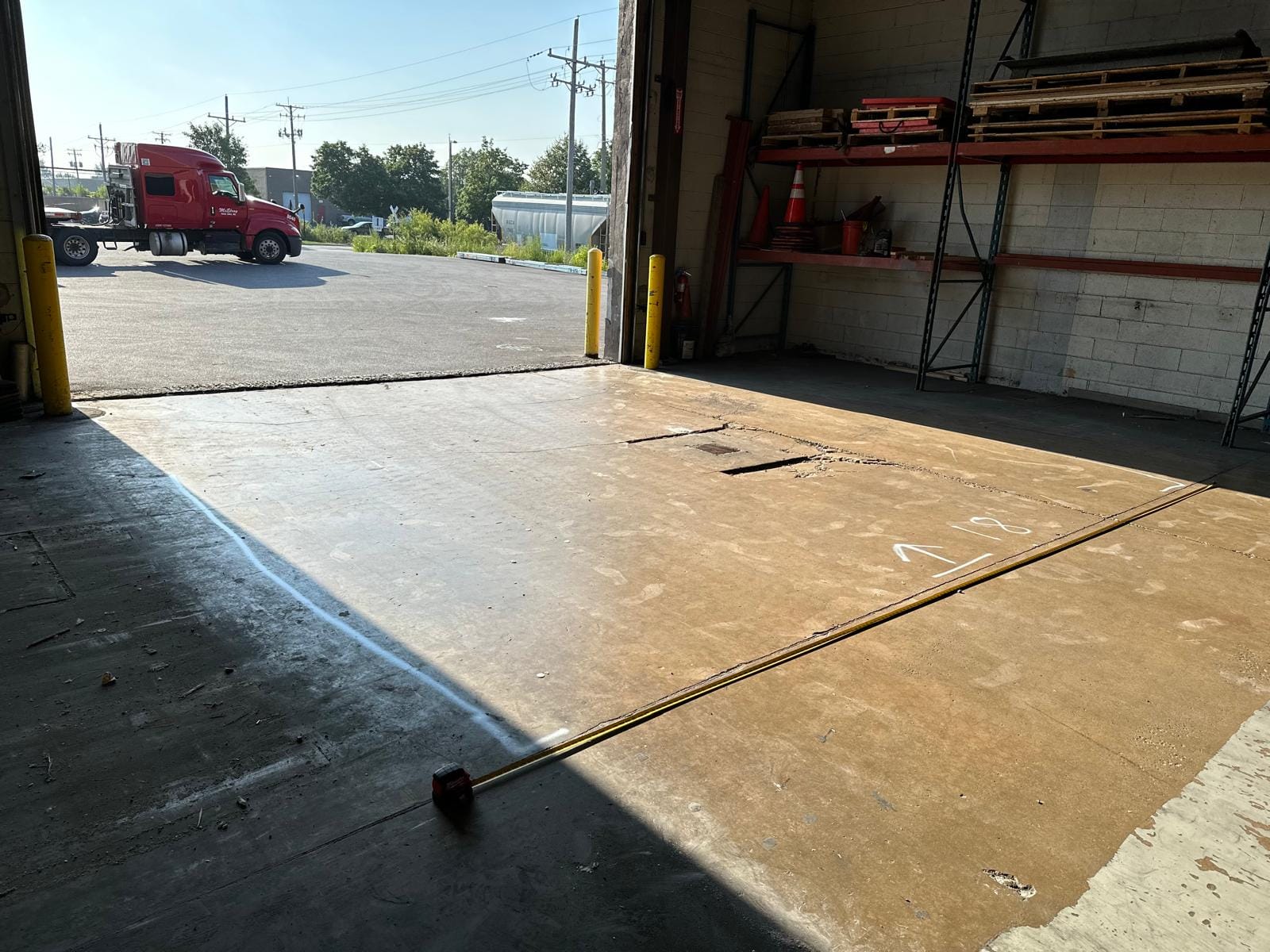
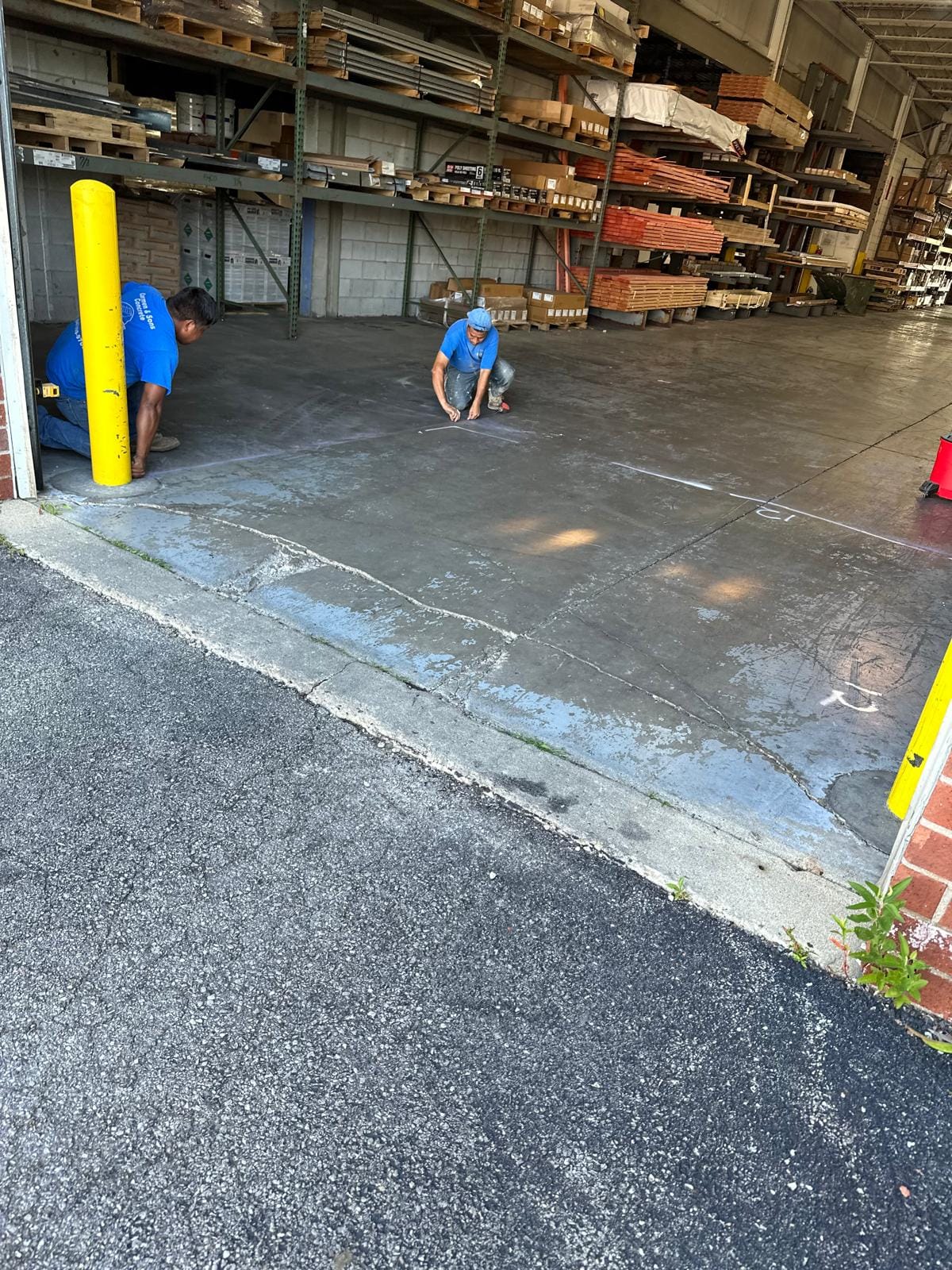
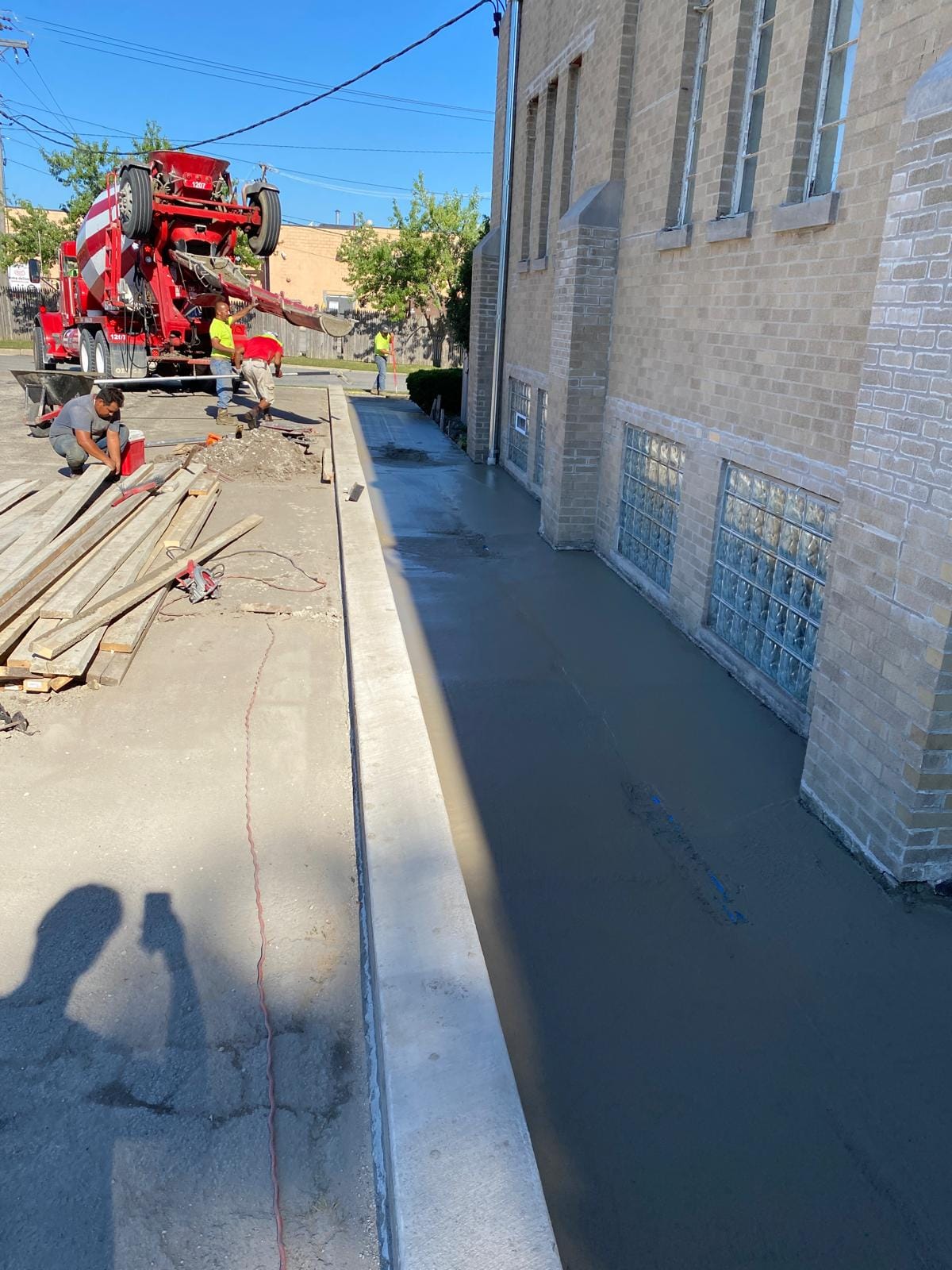
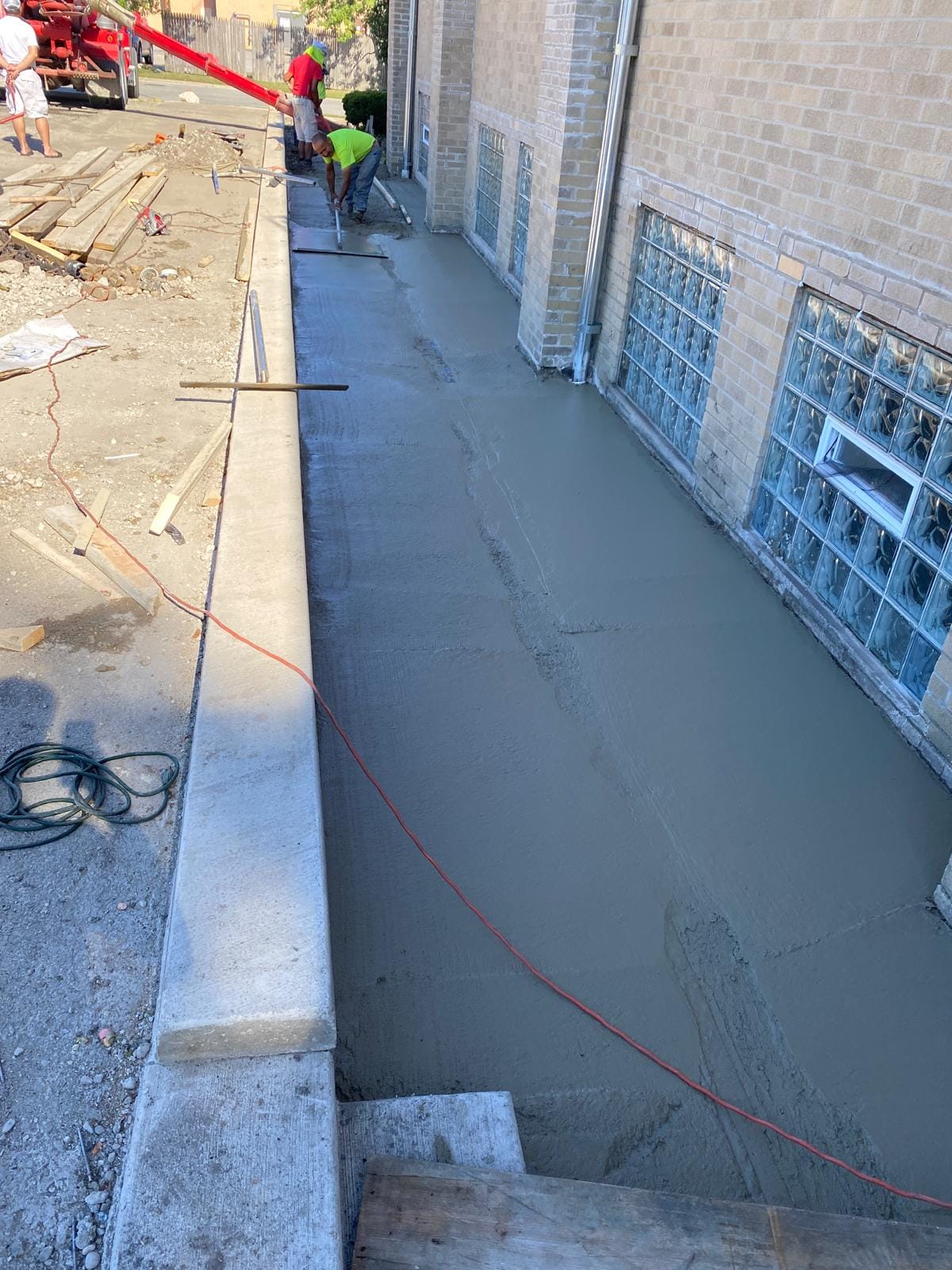
Loading dock apron replacement
A spalled, cracked dock apron at a building-supply warehouse cut out and replaced so forklifts and trucks roll in flat.
Commercial Floors questions
How much does a commercial concrete floor cost per square foot?
It turns on thickness, reinforcement, the flatness tolerance specified, and the finish. Send us the plans or let us walk the space, and we return a written square-foot price at no charge.
How thick should a warehouse floor be?
Six inches over compacted stone handles most pallet-jack and light forklift traffic. Heavy lift trucks or high rack post loads call for eight inches with dowelled joints.
Can you pour at night or on weekends?
Yes, and for occupied buildings we usually do. We stage the pour in sections so part of the floor returns to service while the next section cures.
How long before we can put racking and forklifts on it?
Foot traffic at 24 to 48 hours, light loads at 7 days, full design load at 28 days. Racking anchors should not be drilled until the slab reaches design strength.
Summarize this page with AI
Opens your assistant with the question ready. Answers come from the assistant, not from us.
Commercial Concrete Floors near you
Related: New Concrete Installation · Epoxy Flooring · Concrete Repair & Resurfacing · Parking Lot Striping. Updated 2026-09-06.
Free commercial floors estimate
Same-day callback on weekdays. On-site measurement, written price, permit filed.