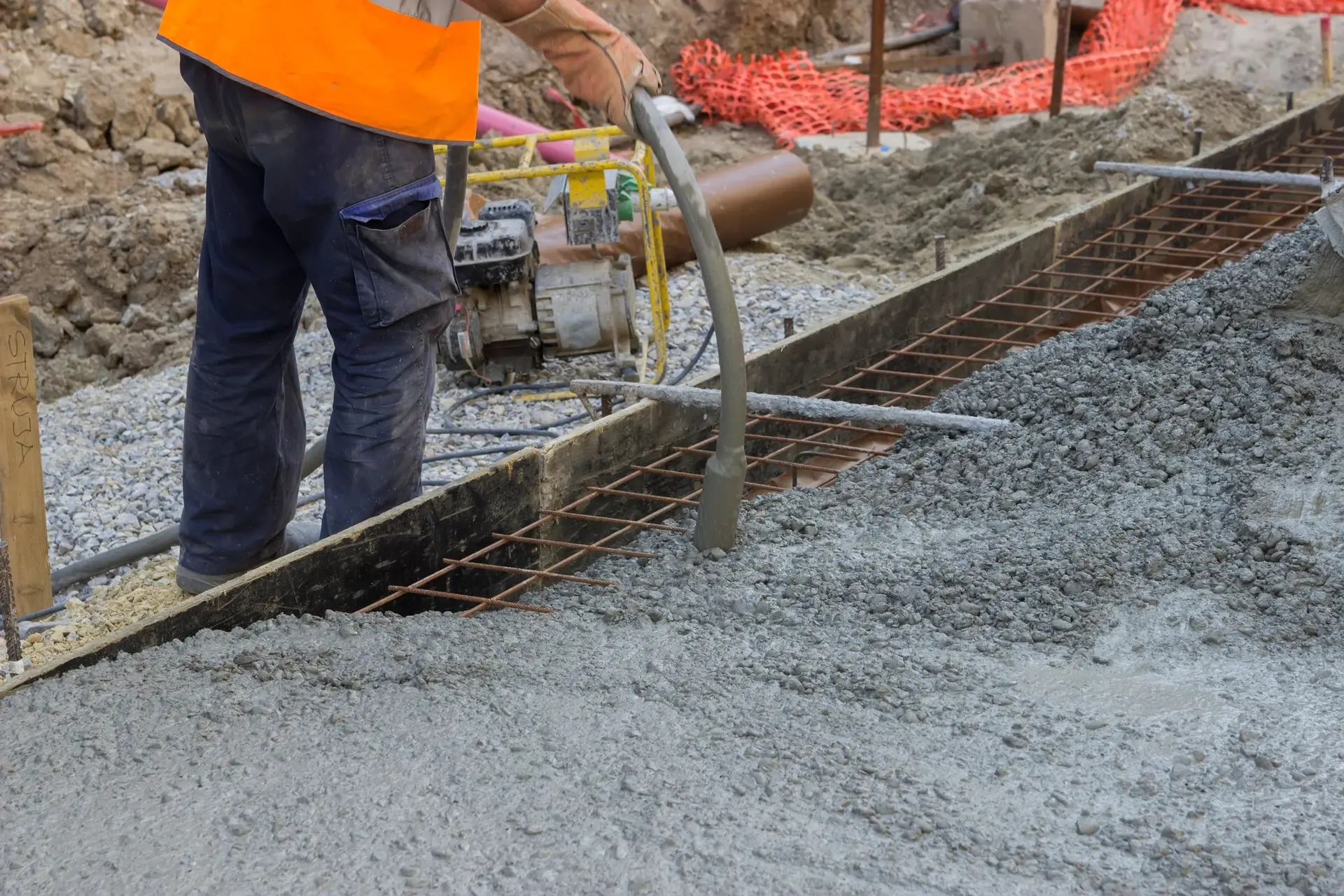
The Secret to Flawless Concrete: Why Vibration Can’t Be Skipped
Achieving a strong, smooth, and long-lasting concrete pour isn’t just about the mix—it’s about what happens after the truck rolls away. Without proper consolidation, even the best concrete can develop hidden weaknesses, surface defects, and premature deterioration. That’s where concrete vibrators come in, playing a critical role in eliminating trapped air and ensuring a dense, uniform finish. In fact, skipping vibration can leave as much as 10% air content in a slab—enough to drastically reduce strength and durability.
In this guide, you’ll learn how concrete vibrators work to enhance structural integrity, improve surface quality, and prevent costly rework. Whether you’re pouring driveways in Naperville, patios in Aurora, or foundations across the Midwest, understanding vibration techniques helps prevent common issues like honeycombing, cracking, and surface blemishes.
You’ll discover the different types of vibrators, best practices for use, and how to match the right tool to your project—ensuring every pour meets professional standards. From residential sidewalks to commercial slabs, proper vibration is the unseen key to concrete that lasts.
How Concrete Vibrators Eliminate Air Pockets for Stronger, Denser Results
Concrete vibrators play a critical role in achieving optimal strength and durability in poured concrete structures. During placement, air becomes naturally trapped within the mix, creating voids that compromise structural integrity, reduce compressive strength, and increase the risk of cracking or spalling over time—especially in freeze-thaw environments common across the Midwest. Concrete vibrators solve this problem by applying high-frequency mechanical motion to the wet concrete, promoting aggregate settlement and allowing entrapped air bubbles to rise and escape. This process, known as consolidation, ensures a uniform, densely packed final product.
There are three primary types of vibrators used on job sites: internal (or immersion) vibrators, external (form) vibrators, and surface vibrators. Internal vibrators are the most widely used, consisting of a vibrating head attached to a flexible shaft inserted directly into the concrete. They’re ideal for columns, footings, and foundation walls. External vibrators are mounted on formwork and are best for precast applications, while surface vibrators level and consolidate thinner slabs, such as patios or driveways in suburban areas like Naperville or Schaumburg.
To maximize effectiveness, operators should insert vibrators gradually and avoid over-vibrating, which can cause material segregation. Proper use leads to a smoother finish, improved bonding with rebar, and longer-lasting, code-compliant installations.
3 Types of Concrete Vibrators Every Contractor Should Know
Proper compaction is essential for achieving durable, high-strength concrete, and concrete vibrators play a critical role in eliminating trapped air and ensuring uniform density. Understanding the three primary types—internal (poker), external (form), and surface vibrators—helps contractors choose the right tool for each project, especially in heavy-duty applications across commercial foundations, retaining walls, and industrial slabs in the Midwest.
- Internal Vibrators (Poker Vibrators)
Ideal for deep pours like columns, footings, and walls, internal vibrators are inserted directly into fresh concrete. These wand-like tools use high-frequency vibrations to collapse air pockets and settle aggregate, promoting maximum density. Available in electric, pneumatic, or gas-powered models, they’re especially effective in Northern Illinois construction where frost resistance and structural integrity are paramount. For best results, follow the “one-third overlap” rule—insert the vibrator at intervals no more than 1.5 times its effective radius. - External Vibrators (Form Vibrators)
Mounted to the outside of formwork, external vibrators transmit energy through the mold to compact concrete within. They’re ideal when internal access is limited, such as in precast operations or thin wall sections. Clamped securely to steel or timber forms, these units prevent honeycombing and surface defects. While powerful, they require precise timing—over-vibration can segregate the mix or damage forms. - Surface Vibrators
Used primarily on flatwork like slabs, driveways, and pavements, surface vibrators sit atop the poured concrete. Plate and pan vibrators smooth and densify the top layer, improving finish quality and reducing scaling risks in freeze-thaw climates. Optimal for residential patios in Naperville or industrial flooring in Aurora, they work best on thinner placements under 6 inches deep. Always operate them slowly and evenly to avoid creating weak zones.
Mastering Vibration: Step-by-Step Best Practices for Perfect Concrete Consolidation
Achieving dense, high-strength concrete requires precise use of vibrators to eliminate air pockets and ensure proper consolidation. Follow these steps for optimal results on any pour, whether you're working on driveways in Naperville or foundations in Schaumburg.
- Begin Vibration Immediately After Pouring
Start vibrating as soon as concrete is placed—delaying increases the risk of surface scaling and cold joints. Work quickly but methodically, especially in cooler Midwest climates where setting times vary. - Insert the Vibrator Vertically and Deep Enough
Lower the vibrator fully into the lift, penetrating about 6 inches into the previous layer to ensure bonding. Keep it vertical to prevent segregation and maintain uniform density across slabs and walls. - Hold for the Right Duration—Typically 5 to 15 Seconds
Leave the vibrator submerged until paste rises to the surface and entrapped air escapes. Over-vibrating can cause aggregate settling and weaken the mix, particularly in fine-grained applications. - Withdraw Slowly in a Controlled Motion
Pull the vibrator out gradually—no faster than 3 inches per second—to avoid leaving voids or channels in the concrete. - Overlap Vibration Points Every 18 to 24 Inches
Space insertions evenly to ensure full coverage without gaps, especially critical in thick sections or reinforced pours. Pro Tip: Always match vibrator size to form dimensions—use internal (immersion) vibrators for deep pours and external (form) models for thin walls or precast work. Proper technique ensures durable, bubble-free concrete that withstands freeze-thaw cycles common across Northern Illinois.
Avoid Costly Errors: Proper Concrete Vibrator Use for Structural Integrity
Using concrete vibrators incorrectly can compromise the durability and safety of any concrete structure, from driveways in Naperville to commercial slabs in Schaumburg. One of the most frequent mistakes is over-vibration, which causes aggregate segregation and excess water rise—leading to weak surface layers prone to cracking and dusting. Equally damaging is under-vibration, where trapped air pockets and incomplete consolidation leave voids that reduce compressive strength and accelerate deterioration, especially in freeze-thaw environments common across Northern Illinois.
Another common error is improper vibrator insertion depth. For optimal results, the vibrator head should penetrate into the previously poured layer when placing concrete in lifts, ensuring a seamless bond and minimizing cold joints. Failing to do so creates weak planes within the slab or wall, undermining structural continuity.
Choosing the wrong vibrator type—whether internal (immersion), external (form), or surface—can also hinder performance. Matching the vibrator to the formwork size, rebar density, and placement method is essential for even consolidation.
To prevent damage:
- Limit vibration time to 5–15 seconds per location
- Insert and withdraw slowly to avoid forming voids
- Maintain consistent spacing (typically 18–24 inches apart) Proper technique ensures dense, durable concrete that meets safety and longevity expectations year after year.
Your Top Questions About Concrete Vibrators—Answered
Choosing the right concrete vibrator and maintaining it properly can make or break the integrity of your pour. From job sites in Chicago to suburban developments in Naperville, contractors frequently ask key questions about selection, upkeep, and safety when working with these essential tools.
What type of concrete vibrator should I use for my project?
Vibrator choice depends on your application. Internal (penetration) vibrators are ideal for footings, columns, and walls with rebar congestion. Surface vibrators work best for slabs-on-grade, while form vibrators are used for precast operations. Match the vibrator’s frequency and amplitude to your concrete mix and formwork size for optimal consolidation.
How do I prevent honeycombing in formed walls?
Ensure complete air removal by fully inserting the internal vibrator into each placement zone, overlapping strokes and holding it briefly until entrapped air escapes and the surface becomes glossy. Avoid over-vibrating, which can cause segregation.
What maintenance steps extend vibrator life?
After each use, clean the head and shaft, inspect for hose kinks or cracks, and check motor seals. For mechanical vibrators, lubricate according to the manufacturer’s schedule. Store hoses coiled loosely in temperate conditions to prevent cracking.
Are electric or pneumatic vibrators safer on-site?
Pneumatic models are safer in wet conditions common in Northern Illinois basements or outdoor pours, as they eliminate shock risk. Electric vibrators require GFCI protection and dry operation zones to comply with job site safety standards.
How often should I replace vibrator components?
Replace hoses every 3–5 years or sooner if cracks appear. Inspect vibrating heads annually for wear, especially on high-volume projects. Failed components reduce efficiency and compromise concrete density.
Can improper use affect structural integrity?
Yes—under-vibrating leaves voids and weak zones, while over-vibrating leads to segregation and surface dusting. Train crews on proper dwell time and spacing (typically 18–24 inches apart) to ensure uniform consolidation.
What safety gear is required when operating concrete vibrators?
Always wear insulated gloves, safety glasses, and hearing protection. For high-frequency models, consider vibration-reducing gloves to minimize hand-arm vibration syndrome (HAVS) risk during extended use.
The Lasting Impact of Proper Concrete Vibration Techniques
Achieving strong, durable concrete installations starts with one often-overlooked step: effective vibration. Throughout this guide, we’ve explored how air pockets, improper consolidation, and segregation can compromise structural integrity—especially in foundational applications like driveways, patios, and retaining walls across regions with harsh freeze-thaw cycles, including Northern Illinois. Now, it’s clear that vibration isn’t just a step in the process—it’s a critical factor in ensuring long-term performance.
When done correctly, vibration removes trapped air, increases density, and enhances the concrete’s ability to resist cracking, scaling, and water infiltration. This means fewer repairs, reduced long-term maintenance, and significantly extended service life for every pour. Whether you're working with slabs-on-grade in Naperville or decorative patios in Schaumburg, properly vibrated concrete sets the foundation for lasting results.
To maximize outcomes, always match your vibrator type—internal, external, or surface—to the application, follow recommended vibration times, and avoid over-vibrating, which can cause material segregation. Consistency is key.
For best practices, consult a qualified contractor familiar with local soil and climate conditions. Investing time in proper vibration techniques today ensures safer, stronger, and more resilient concrete installations tomorrow—so you can build with confidence, season after season.